
Streamline Claims Processing by Automating Everything Right From Filing to Fulfillment
Introduction
End-to-end claims processing has been an unrealized vision for years across a wide variety of products, but new automation technology— including RPA and artificial intelligence—makes it possible today. The insurance claims management market in India is expected to reach USD 585.8 million by 2030, growing at a CAGR of 15%. This rapid growth underscores the importance of efficient claims processing systems in the Indian insurance sector.
What is Claim Processing Automation?
Claims processing is one of the most common—and time-consuming—workflows for insurance carriers and customers alike. This approach leverages AI in claims processing, including intelligent algorithms, machine learning, and optical character recognition (OCR), to automate data entry, document verification, decision-making, and communication with stakeholders. Key drivers of this growth include:
- Rising income levels and increased insurance awareness
- Strong demand for digital solutions, with 73% of customers preferring digital claims processing
- An industry-wide push for technological adoption and process automation
In Simple: Claims processing automation is the use of AI, RPA, intelligent document processing (IDP), and workflow orchestration to automate the entire insurance claims lifecycle—from first notice of loss (FNOL) to settlement—reducing manual effort, processing time, errors, and fraud while improving customer experience and regulatory compliance.
As insurers face rising claim volumes, stricter regulations, and digital-first customer expectations, claims automation is no longer optional—it is a competitive necessity.
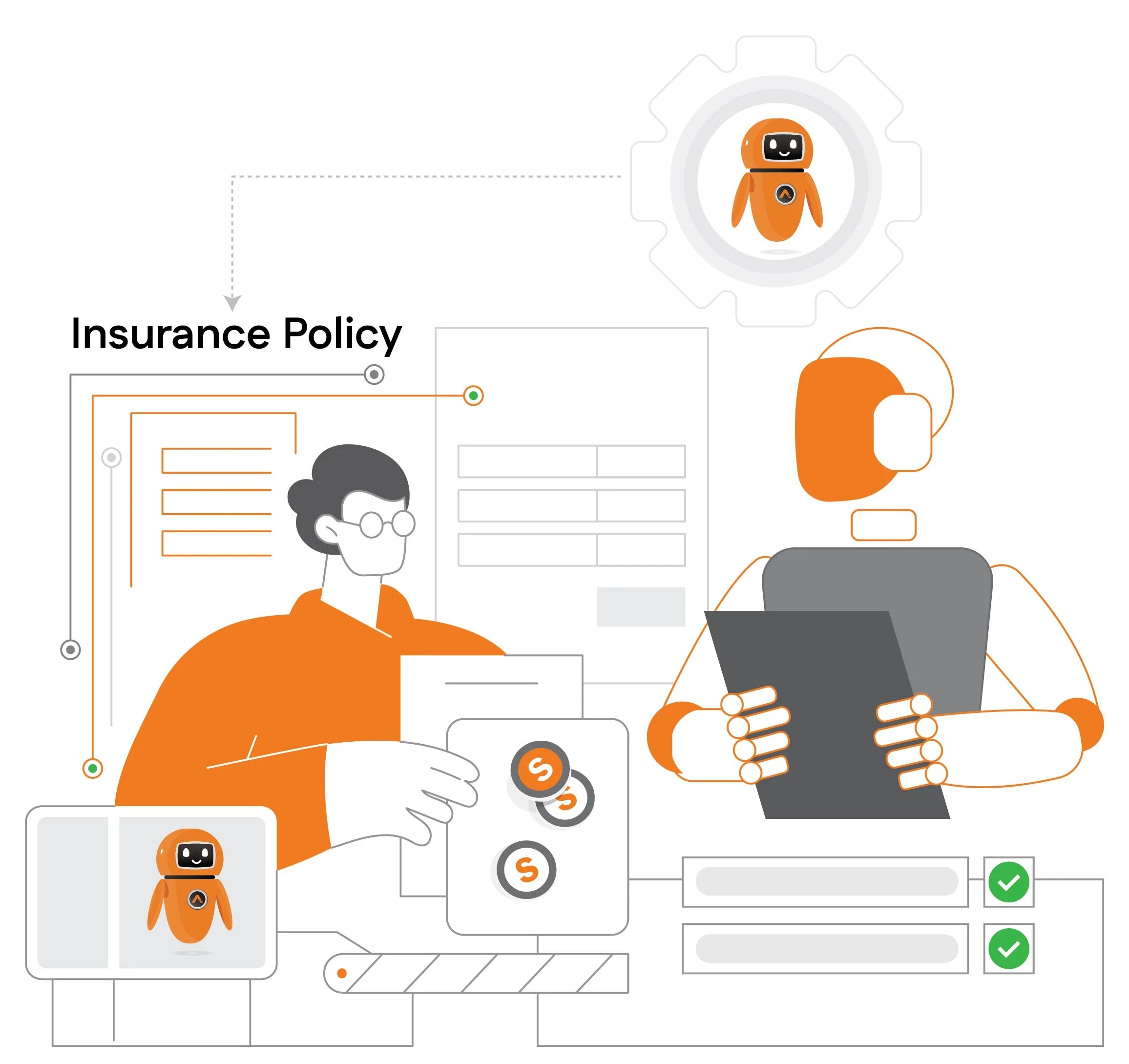
Challenges in Claim Processing
Automation for claims processing enables 24/7 operations, minimizes human effort, and improves resource utilization, allowing insurers to handle higher claim volumes without proportional increases in workforce or expenses
Automation:
A health insurer employs 50 staff for data entry and validation. Automation reduces manual effort by 70%, cutting staffing costs and processing thousands of claims without hiring more resources.
Automation enforces standardized, rule-based processing and decision-making, ensuring every claim is handled uniformly for fairness and reliability.
A motor insurer faces complaints when two agents assess identical accident claims differently, leading to payout disputes. Automation applies consistent algorithms, delivering uniform, fair compensation every time, boosting customer satisfaction.
Integrating data from disparate sources like policy systems, CRM, and TPAs poses a major hurdle in manual claims processing, often causing inaccuracies, errors in payments, and frustrating delays.
Automation centralizes data from all sources with seamless integration and real-time updates across systems, guaranteeing accurate and timely claim processing.
A life insurer grapples with consolidating fragmented data from policy, CRM, and TPA platforms, resulting in payment errors and delays. Automation unifies these systems for instant, error-free data flow and precise claim resolutions.
AI-driven automation in claims processing, powered by machine learning, revolutionizes fraud detection by instantly analyzing patterns, flagging anomalies, and blocking illegitimate payouts.
Manual reviews miss duplicate health claims from the same patient, costing millions. AI automation spots suspicious patterns in real-time, prevents fraudulent payouts, and safeguards insurer revenues effectively.
Claims processing automation, featuring chatbots, self-service portals, and real-time tracking, delivers 24/7 access, instant updates, and effortless interactions to exceed these expectations.
Customers abandon a health insurer after weeks of opaque manual follow-ups. Automation provides portal-based status checks and chatbot support, resolving queries instantly and elevating satisfaction scores.
Automation embeds the latest compliance rules automatically into every claim workflow, ensuring adherence without manual oversight and minimizing penalty risks.
A life insurer incurs hefty penalties for failing to apply new IRDAI rules manually. Automation auto-updates regulations across systems, guaranteeing every claim complies fully and effortlessly.
Robotic Process Automation (RPA) scales effortlessly, handling massive claim influxes 24/7 without additional staff or delays.
After floods, a general insurer drowns in 10,000 claims weekly under manual strain. RPA scales instantly, processing volumes round-the-clock to eliminate backlogs and maintain smooth operations.
Manual data entry and verification invite inevitable human errors—like typos or misreads—triggering wrong assessments, payment delays, or costly overpayments.
Automation eliminates these risks by auto-validating data across integrated systems with zero-touch accuracy in routine tasks.
A simple typo in policy details stalls a motor claim payout for days manually. Automation cross-verifies entries in real-time across platforms, eradicating errors and accelerating approvals.
Manual claims workflows drag on for days or weeks due to sequential handoffs and verifications, alienating customers and tarnishing the insurer’s reputation.
Automation slashes times from days to hours via streamlined, parallel processing, enhancing satisfaction and loyalty.
Health claims linger 10 days for manual approval, eroding trust. Automation compresses this to 48 hours with intelligent workflows, delighting customers and strengthening retention.
Manual systems hinder effective data collection and analysis, depriving insurers of actionable insights, trend spotting, and informed strategies for optimization or fraud prevention.
Automation unlocks robust analytics by aggregating real-time data, revealing patterns for proactive decisions and continuous improvement.
An insurer misses fraud trends in siloed manual logs. Automation dashboards provide instant analytics, enabling trend identification, process tweaks, and preemptive fraud blocks.

Benefits of Automated Claims Processing
| Benefit | Impact for Insurers |
|---|---|
| Faster claim turnaround | Reduce processing time from days to hours |
| Lower operational costs | 50–65% reduction in processing expenses |
| Improved accuracy | Near-zero data entry and calculation errors |
| Fraud prevention | AI flags anomalies in real time |
| Better customer experience | Transparent, 24/7 claim updates |
| Regulatory compliance | Automatic rule enforcement |
While the table summarizes the core advantages, the real value of claims processing automation becomes evident when you look deeper. Let’s break down each benefit to understand how AI and automation transform claims operations at every stage.


How Claims Process Automation Works?
Claim Lifecycle Management Solution
A Claim Lifecycle Management Solution empowers insurers to balance cost control, risk management, and offer superior service delivery. This structured, end-to-end approach to handling claims reduces administrative overhead and supports strategic decision-making, reinforcing insurer profitability and customer loyalty.
AutomationEdge provides an end-to-end Claim Lifecycle Management solution that automates every stage of the claims process—from initial intimation to final settlement—ensuring faster turnaround, higher accuracy, and better customer experience. Here’s how automation drives each step:


Technologies Driving Claims Automation
Several technologies are at the forefront of claims process automation:
IDP is at the forefront of claims automation, addressing the challenge of handling vast amounts of unstructured data. By combining Optical Character Recognition (OCR), Natural Language Processing (NLP), and machine learning algorithms, IDP can:
- Extract relevant information from various document types (claim forms, medical reports, police records)
- Validate and classify data automatically
- Reduce manual data entry, speeding up claims processing significantly
- Improve accuracy in data capture, minimizing errors in claims assessment
RPA is a cornerstone of modern claims processing, offering significant improvements in efficiency and accuracy. Robotic Process Automation in insurance claims can:
- Automate repetitive, rule-based tasks across multiple systems
- Streamline data entry, verification, and claims status updates
- Operate 24/7, reducing processing times and backlogs
- Seamlessly integrate with existing systems, making it a cost-effective solution for insurers
AI and ML are transforming claims automation by introducing predictive capabilities and advanced analytics. These technologies can:
- Analyze historical claims data to predict outcomes and optimize decision-making
- Detect patterns indicative of fraudulent claims, enhancing fraud prevention
- Provide personalized customer experiences through AI-powered chatbots
- Continuously learn and improve from new data, enhancing the accuracy of claims processing over time
IA represents the convergence of RPA, AI, and cognitive technologies, offering a comprehensive approach to claims automation. It can:
- Orchestrate complex workflows across different departments and systems
- Make intelligent decisions based on predefined rules and AI-driven insights
- Adapt to changing business conditions in real-time
- Provide end-to-end automation of the claims process, from First Notice of Loss (FNOL) to settlement
These AI-powered conversational interfaces are revolutionizing customer interaction in claims processing. They can:
- Provide 24/7 support for claim initiation and status inquiries
- Guide policyholders through the claims process, improving customer experience
- Reduce the workload on human agents by handling routine queries
- Collect initial claim information efficiently, speeding up the overall process
Agentic AI takes automation a step further by introducing autonomous, goal-driven decision-making in claims processing. With Agentic AI, insurers can:
- Deploy intelligent agents that plan, reason, and execute multi-step claim workflows with minimal human intervention
- Dynamically adapt to exceptions and optimize workflows in real time for faster resolutions
- Collaborate with RPA bots to manage complex, end-to-end processes efficiently
- Continuously improve operational strategies by learning from past claim resolutions and outcomes.
Case Study


Future of automated claims processing

Agentic AI for Autonomous Claims Handling
Claims will move from rule-based automation to goal-driven agents that can assess, decide, and resolve exceptions independently.

Zero-Touch Claims for Standard Cases
Health, travel, and motor claims under predefined thresholds will be settled without human intervention.

Explainable AI for Regulatory Trust
AI decisions will include audit-ready explanations to meet IRDAI and global compliance standards.

Hyper-Personalized Claim Experiences
AI will tailor claim communication based on customer behavior, urgency, and policy type.

Embedded Insurance & Real-Time Claims
Claims initiation will occur directly from IoT devices, apps, and partner ecosystems.


Additional Resources



FAQs
AI in claims management is used to analyze claim data, detect anomalies, and automate decision-making processes. It helps insurers assess damage, evaluate liability, and even predict fraudulent claims more effectively.